Spend less time on materials. More time with the kids.
Templates, an image library, AI image and audio generation, and parent reports that write themselves — MindTherapy gives the hours back to the kids who need you.
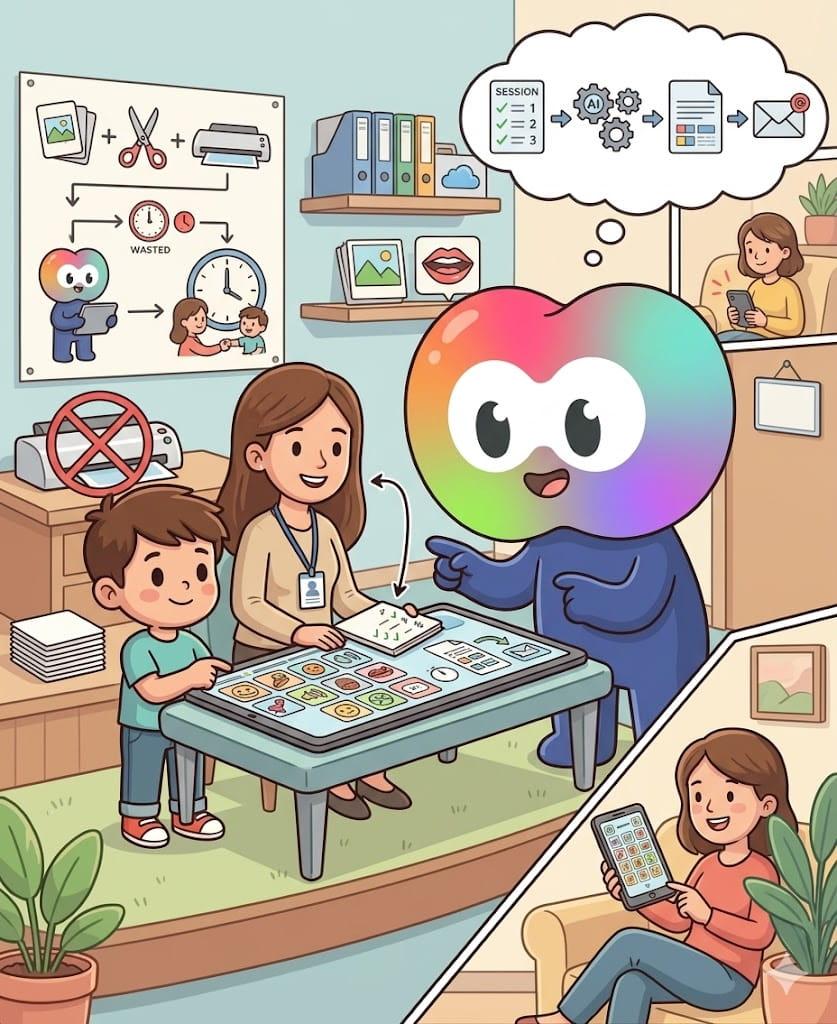
What changes in your week
Hours of prep go back to the people who matter.
Cutting and laminating new tiles every Sunday for tomorrow's sessions.
With MindTherapy: A growing library of pictures, plus AI image generation when you need a tile that doesn't exist yet.
Recording your own voice clips for every word, every child, every prompt.
With MindTherapy: AI-generated audio in Portuguese or English, ready in seconds.
Writing the same parent update from scratch after every session.
With MindTherapy: Reports compiled automatically from session data and your notes — warm, jargon-free, ready to send.
Sessions stop the moment the child walks out of the room.
With MindTherapy: Parents use the same boards and routines at home, so the work continues with the people the child sees every day.
A typical session
What a Tuesday morning looks like with MindTherapy.
Mariana is a speech therapist. Tomás is one of her clients. Here's a normal session — and the work that doesn't happen because the app handles it.
Mariana opens MindTherapy on her tablet, taps Tomás's profile. Today's plan: AAC for snack-time vocabulary, then a hygiene routine. The boards are already set up from last week — small tweaks take 30 seconds.
Tomás arrives. Hello, settling in. Mariana taps "Start session" — the timer starts in the background, the device flips to child view, and the chrome that doesn't belong in front of a kid disappears.
They open the AAC board. Tomás taps "biscuit" — the tablet says it out loud. He taps "juice". The tablet says it. Tile by tile, more words in one session than in months.
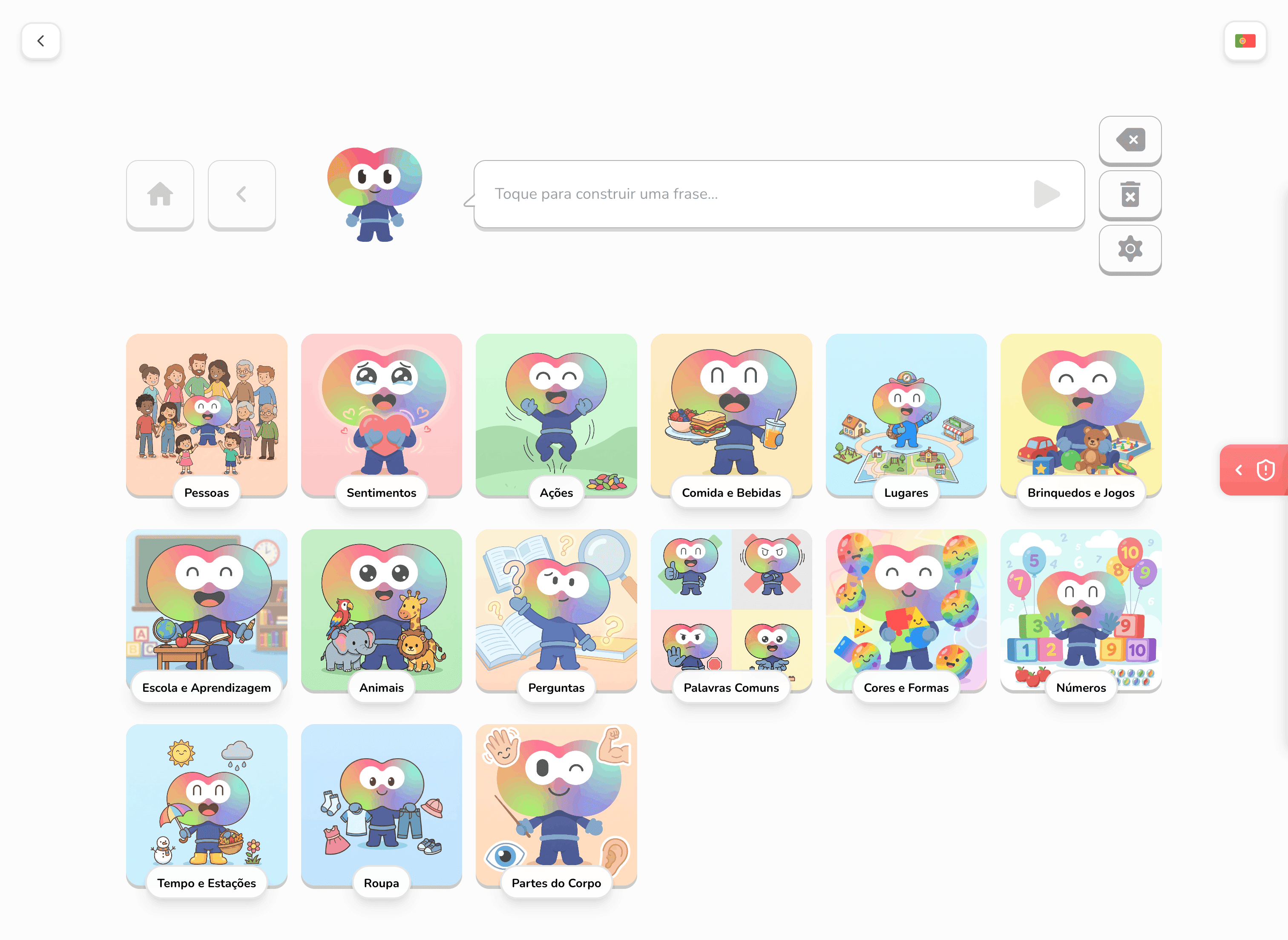
He used the 'tired' tile for the first time today. New context.
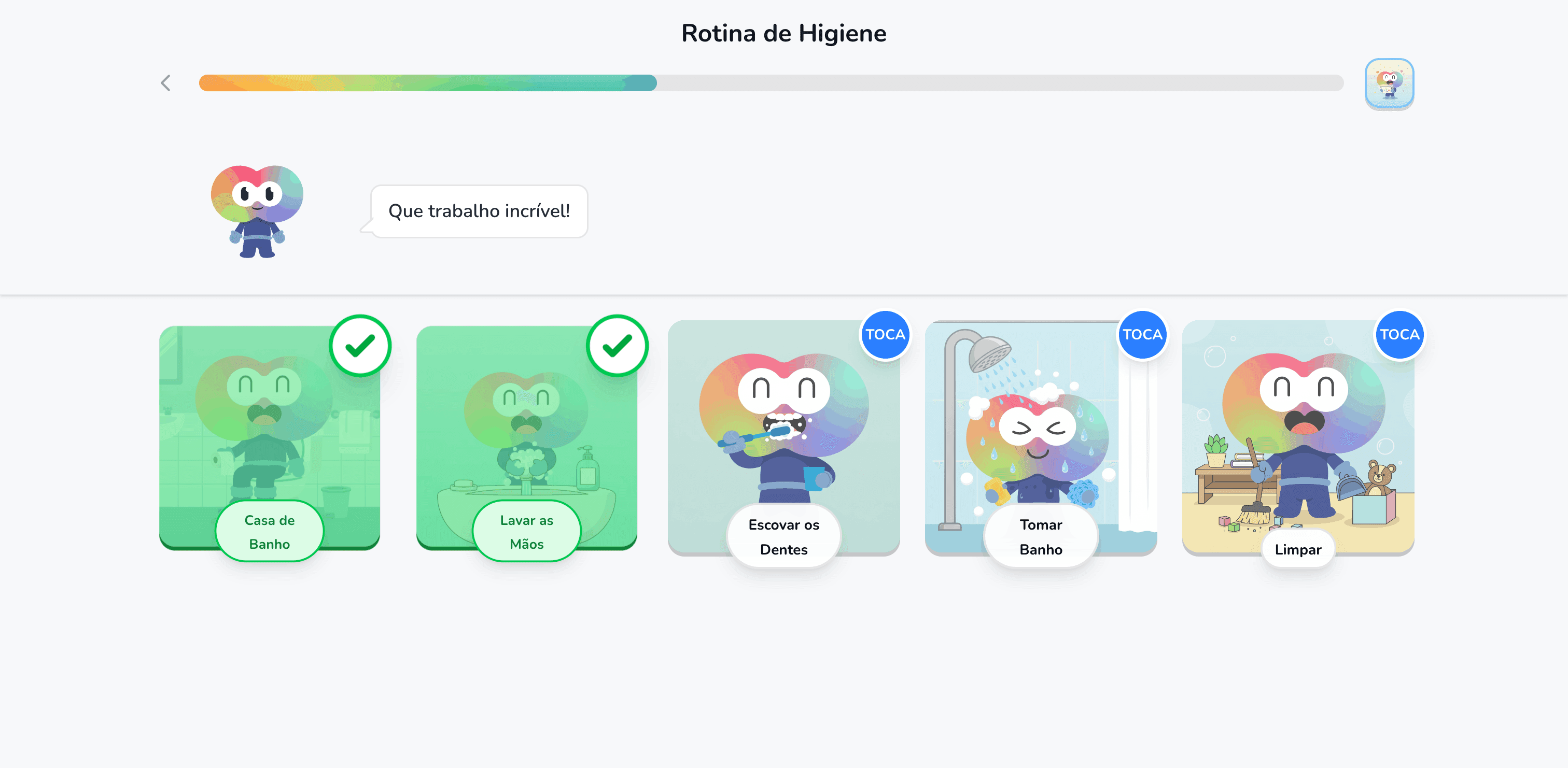
Routine: hygiene. Tomás does the steps from the visual schedule. He pauses on "brush teeth" — Mariana stays patient; the routine doesn't rush him; she adjusts the next prompt without fuss.
Session ends. Mariana taps "End session" — the in-app note prompt opens. Two short lines: what was new, what to try next week. Twenty seconds, not twenty minutes.
MindTherapy compiles the session data and her notes into a parent-friendly report. It lands in Tomás's mum's inbox and in the family hub before Tomás is even out the door.
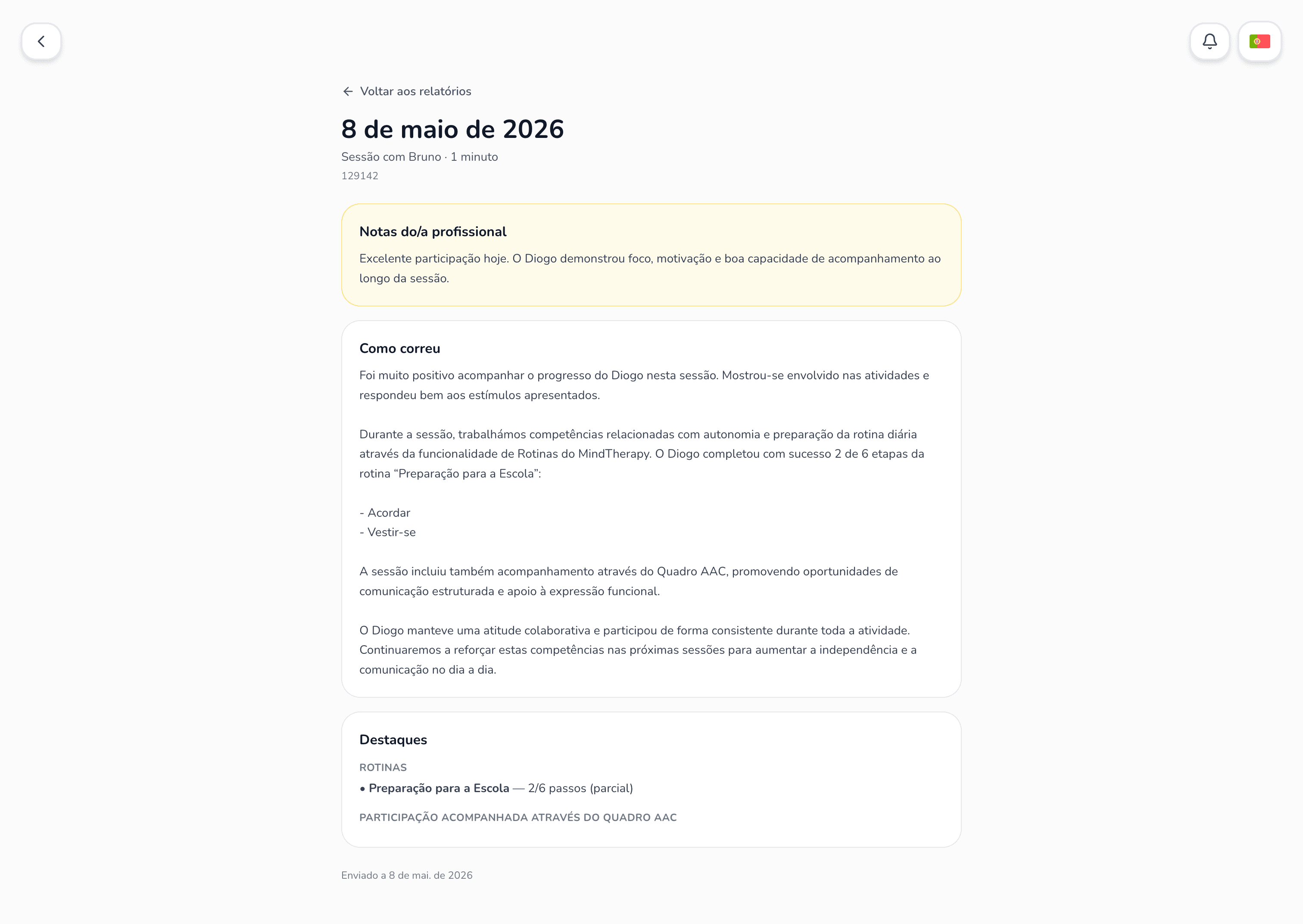
That's the session. The work to share what just happened is already done. Mariana moves on to the next client, not to the keyboard.
The report writes itself
Parents stay in the loop — without you writing the loop.
The session you ran becomes the report they read. No after-hours typing, no blank-page paralysis.

You run the session
Use Augmentative and Alternative Communication (AAC) boards, routines, and a small notes field — the same flow you'd use anyway.

MindTherapy compiles it
We pull the session data and your notes into a single, jargon-free summary written for parents.

Parent reads it — without you writing it
It lands in their hub the same day. Same context, same vocabulary, same warmth — generated, not authored after-hours.
Your toolkit
Tools that save your day, not just your week.
Built for the moments where you'd otherwise be stuck doing busywork.

Routine and board templates
Start from a tested template for morning, school prep, hygiene, meals — and customise from there. Faster than starting blank.

Picture library + AI image gen
Search a growing library, or generate a custom tile when the right picture doesn't exist yet. No more cutting and laminating.

AI audio generation
Generate clear, child-friendly voice clips in Portuguese or English, in seconds — no recording booth required.

Automatic parent reports
Sessions become warm, jargon-free reports for parents. You add a note; we do the rest.
What therapists ask us most
Tap any question to read the answer.
Is my clients' data safe?
Can I customise content per child?
Can I keep using my own session-note format?
What if a parent doesn't engage at home?
Can multiple therapists collaborate on the same child?
Ready to see it in your week?
Sign up takes a minute. No credit card. No commitment. If you're a clinic, school, or hospital, we'd rather hear what you need first.
Tell us about your team and what AI limits you need for day-to-day work.