Your child has more to say than they can show right now.
MindTherapy is a gamified companion for children with autism — picture-based communication, visual routines, and warm reports of what they did today. Built so you can use it at home, alongside your child's therapist.
Before anything else
We hear what parents are quietly worried about.
What if my child won't even tolerate it?
There's no fail state and no time pressure. Most kids try one tile and explore from there. If it's not the right day, we don't push.
I don't want a screen replacing my therapist.
It doesn't. Your therapist is the one setting things up — MindTherapy gives you the same tools at home, so you stay in sync, not on your own.
Is this just expensive screen time?
Sessions are short and tied to a real-world moment — brushing teeth, asking for a snack. The screen helps, then steps out of the way.
What if it doesn't work for my child?
Then it doesn't, and you stop. There's no commitment, no contract, no algorithm pretending to know your child better than you.
A Saturday morning
What it actually feels like at home.
Not a feature list — a quick read through one parent's morning, with the moments where MindTherapy quietly does its job.
Tiago wakes up. Today his routine is on the tablet, not on a printed sheet falling off the fridge.
He sees the steps of the morning hygiene routine — bathroom, wash hands, brush teeth, shower, tidy up. The first two are already checked off. He taps "brush teeth" and the routine carries on.
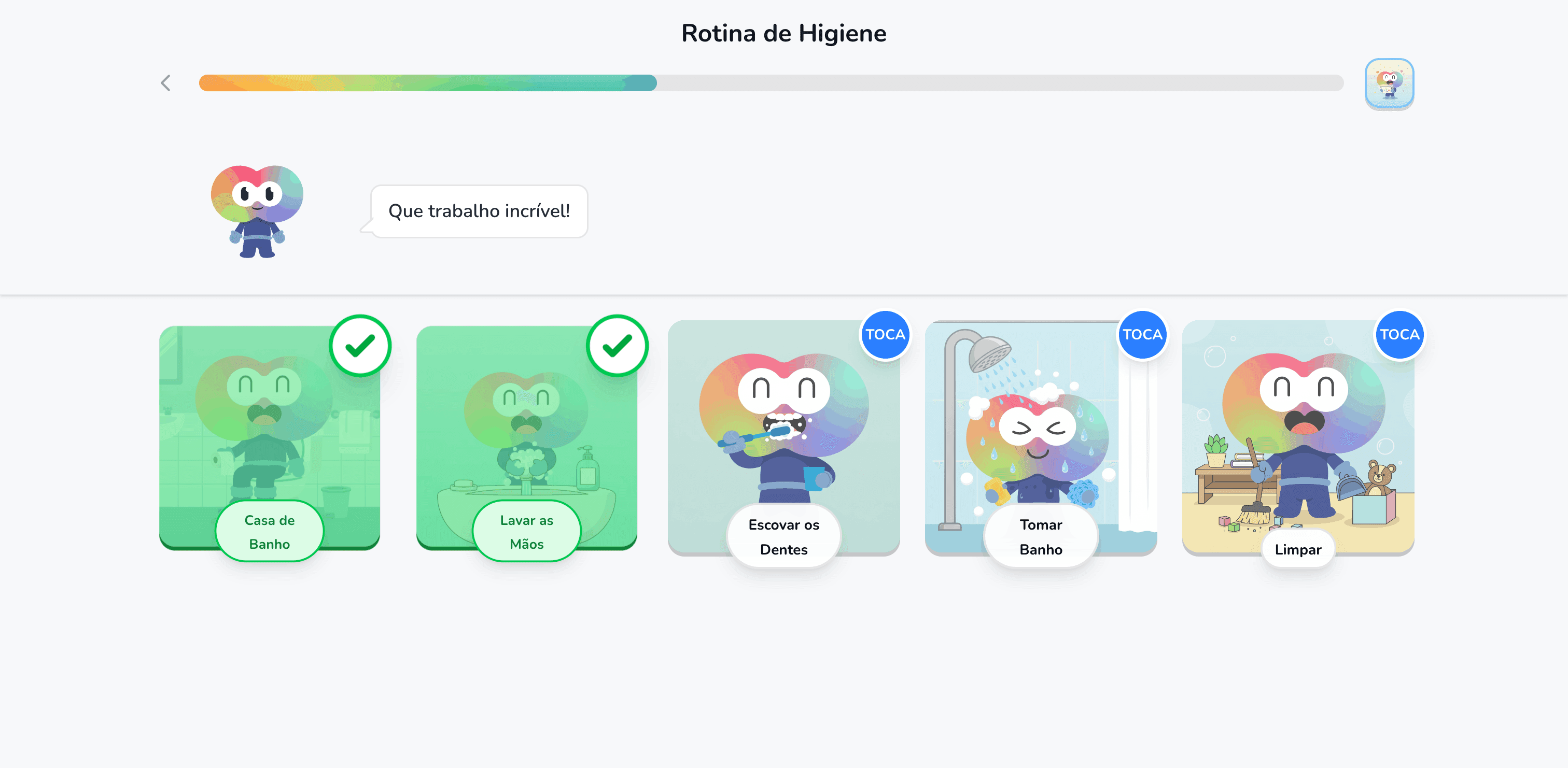
He brushes. He tap-confirms. There's no "wrong" buzzer if he pauses to look out of the window. The routine just waits.
He looked up at me and tapped "more juice" before I even sat down. That was new.
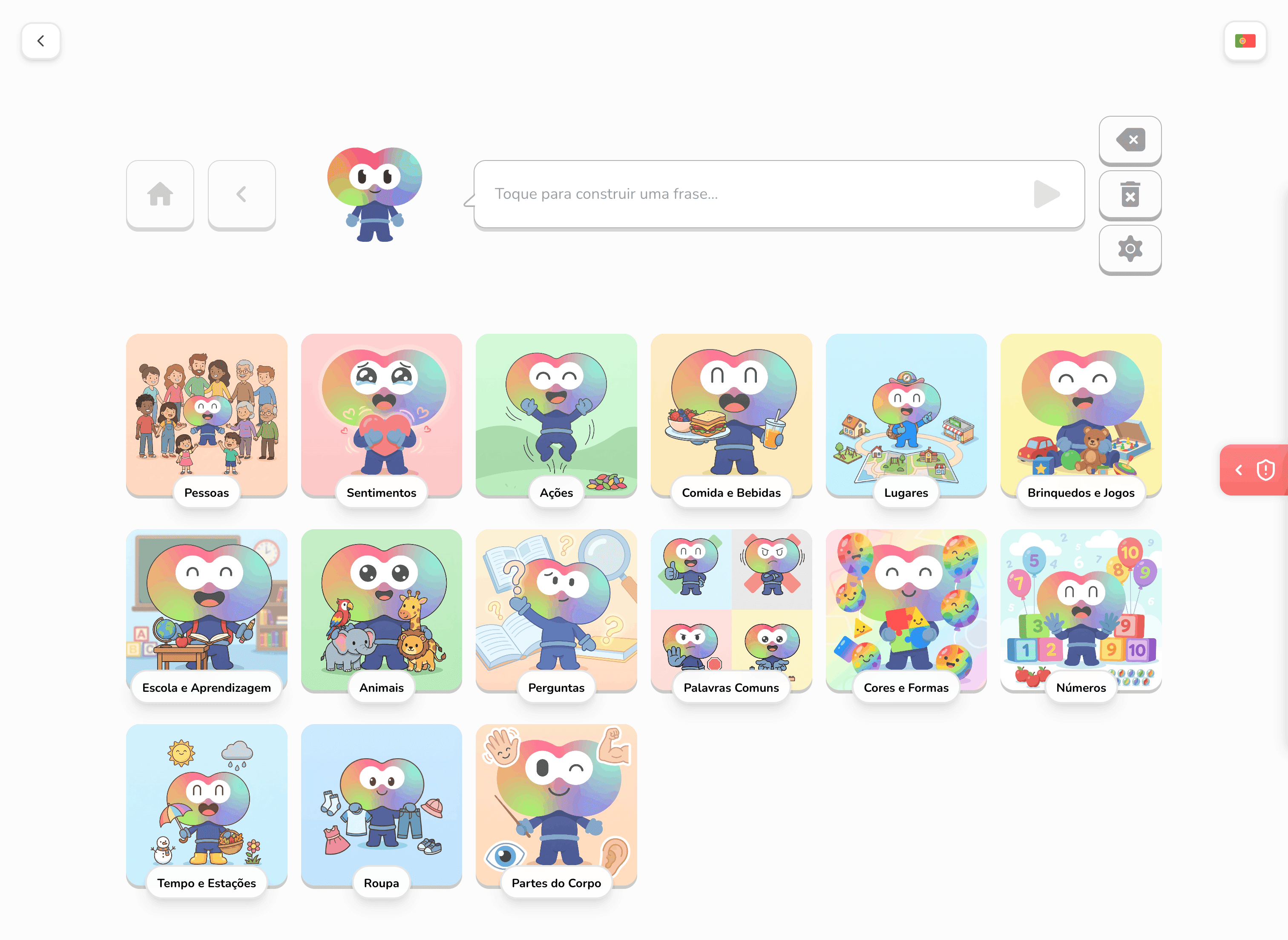
On the Augmentative and Alternative Communication (AAC) board, Tiago taps a tile. The tablet says "I want more juice" out loud, in his voice's language. You hand him the carton.
Back to the routine. He showers, taps the next step, and tidies up. You make coffee. Nobody is shouting.
The routine ends with a small celebration — a star, a quick animation, a confetti burst. Tiago grins. You exhale.
Hours later, you open the hub on your phone. Stars earned today. Routines completed. A note from his therapist: "Tried adding the new tile?"
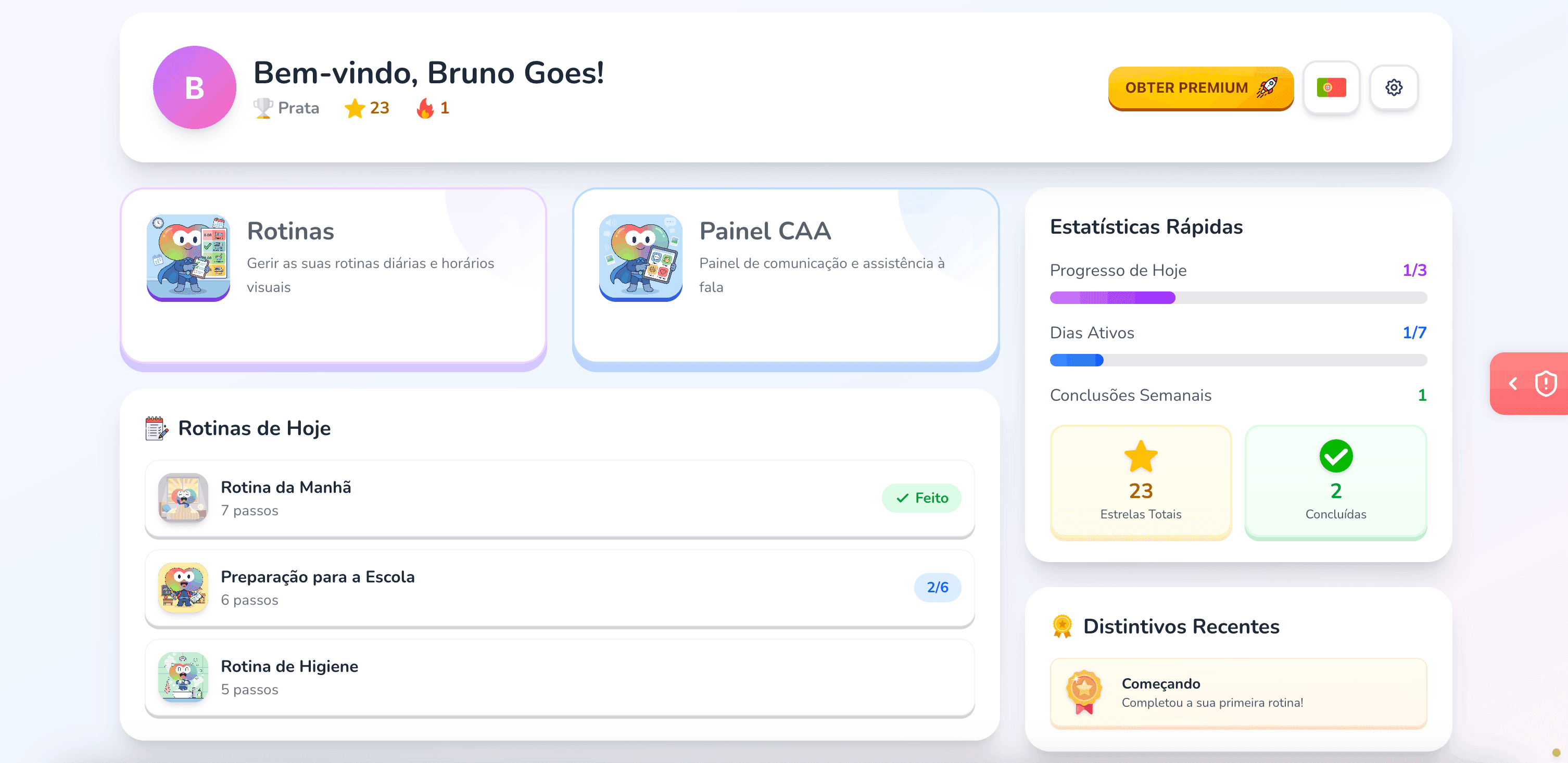
That's it. That's the page. The point isn't "look at our features" — it's that your morning just got a little easier, and your child got a little louder.
Always in the loop
You always know how it's going.
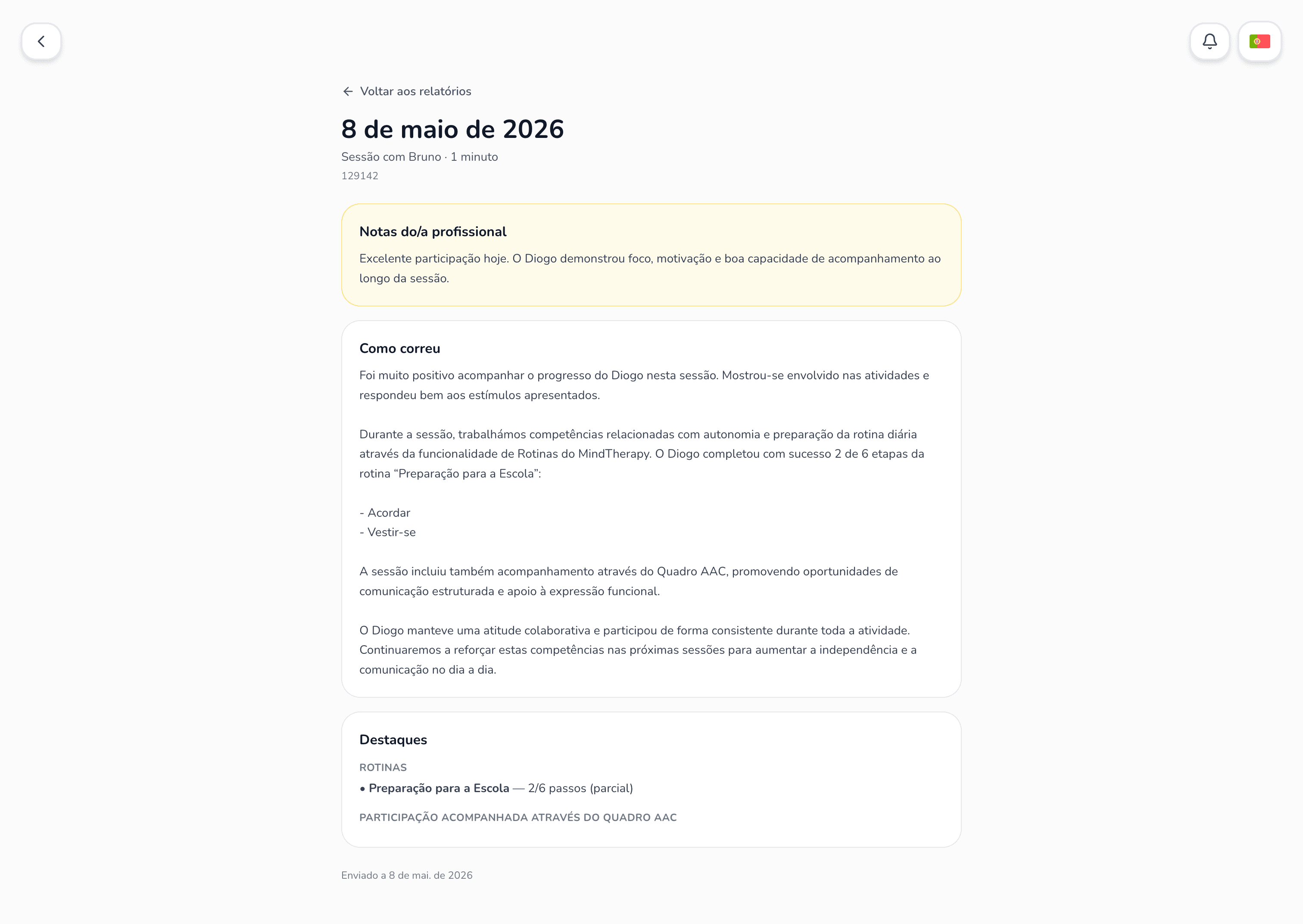
Sessions become reports. Reports come to you. No phone calls, no waiting for the next appointment.

Therapist runs a session
Your child's therapist uses the app during a session — tracking what your child did, marking milestones, jotting notes.

MindTherapy compiles it
We pull the session's data and the therapist's notes into a single, jargon-free summary written for parents.

You get the report
It lands in your hub the same day — and in your inbox if you opted in. Read it in two minutes, anywhere.
You're not alone, and you're not replaced.
Each person has a role, and MindTherapy connects them.

Your child
Taps tiles, completes routine steps, earns stars. The interface is simple, large, and forgiving — designed for kids, not adults.

You
Set up the things that matter at home — bedtime, mealtime, tantrum-trigger words. Read the daily reports. Stay close to what your child is doing.

Your child's therapist
Builds the clinical content, runs sessions, and shares it with you so you can use the same tools at home. You both stay aligned without extra meetings.
What parents ask us most
Tap any question to read the answer.
Will my child actually like it?
What about screen time?
What if my child doesn't have a therapist yet?
How do I introduce it to my child?
What if my child doesn't engage at first?
Ready to bring it home?
Sign up takes a minute. No credit card. No commitment. If you want your child's therapist on board first, we made that easy too.
Tell them MindTherapy can be set up in five minutes — and they can keep using their session notes the way they already do.